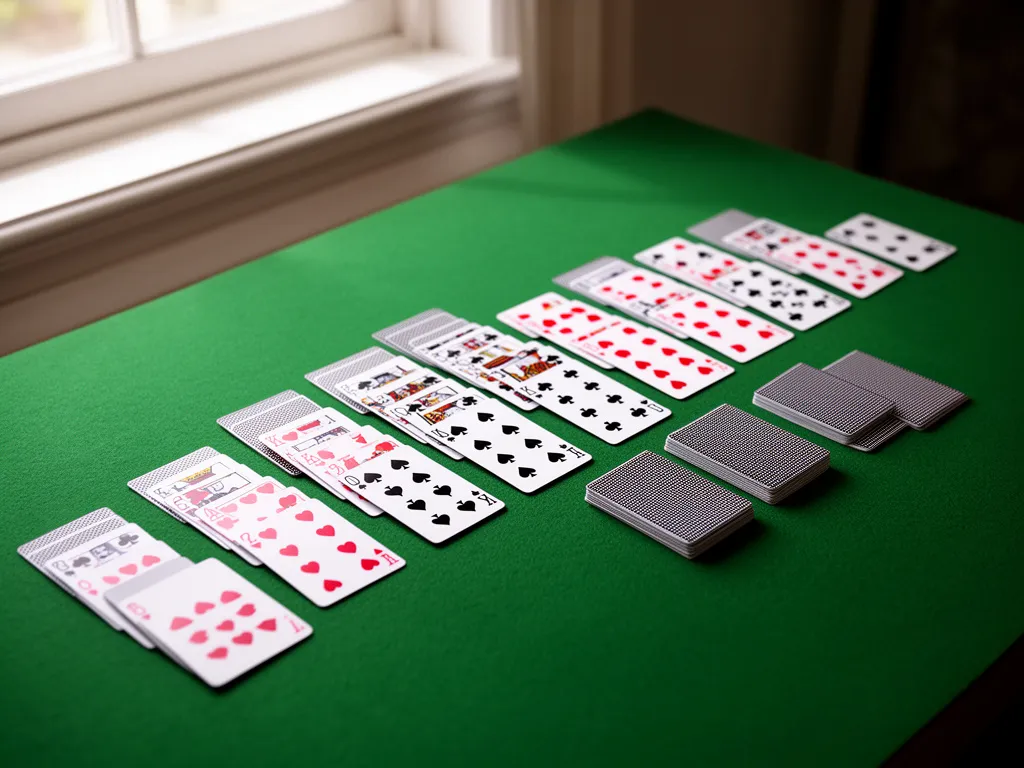
For players seeking a tougher variant that remains approachable, two-suit play sits between 1-suit simplicity and 4-suit complexity. If you search for spider solitaire two suits free, this guide provides a clear path: setup, rules, and proven strategies to improve your win rate on Solitaire Compass.
Read also: Spider Solitaire Original: Master 1-, 2-, and 4-Suit Play
Understanding the two-suit format
What changes when you play two suits?
In two-suit mode, the deck uses only two suits from the two-card decks used in Spider Solitaire. You still aim to build complete runs from King down to Ace within a single suit to remove them. With fewer suits in play, you rely more on sequencing, card revelation, and maintaining long, intact runs to unlock future moves.
- Deck composition: only two suits appear in the tableau and stock, increasing the frequency of gaps and dead cards.
- Run preservation: longer same-suit sequences become more valuable; breaking them late costs more moves to rebuild.
- Move strategy: focus on exposing face-down cards in piles that reveal high-value cards for future runs.
- Difficulty curve: two-suit is harder than 1-suit but more manageable than 4-suit, making it a common stepping-stone for players.
- Score and timing: faster completion yields higher scores, but efficient sequencing often beats brute force.
Setup and official rules for two-suit play
Initial layout and dealing procedure
- Choose two-suit mode from the game’s variant settings.
- Deal the initial 50 cards into 10 piles: the first four piles receive six cards and the remaining six piles receive five cards, with the top card in each pile face up.
- Leave the remaining deck as stock to be dealt in future rounds, typically one new row per deal.
- Only cards of the two selected suits appear in the tableau and stock.
- Plan your first moves by identifying visible sequences that can be moved without breaking key long runs.
Rules at a glance
Build descending sequences in the same suit (e.g., King to Ace). You can move any face-up card along with any contiguous same-suit sequence. When a full King-to-Ace run of a single suit is formed, it clears from the tableau, freeing space and increasing your chances of solving the puzzle. You deal from stock to reveal new cards when no more moves are possible.
Strategy and practical tips
Two-suit play rewards planning and discipline. Use these guidelines to lift your win rate on two-suit free play:
- Preserve long, same-suit sequences. If possible, avoid breaking a long run unless it unlocks a critical card.
- Expose hidden cards methodically. Target piles with face-down cards that reveal high-value cards or multiple potential sequences.
- Limit stock depletion. Only deal when you have exhausted obvious moves and still maintain potential to build new runs.
- Prioritize moves that enable future chains. A single well-placed move can unlock several prospective runs.
- Create a mental map of suits. In two-suit play, knowing which suits are on view helps you decide when to force a breakthrough or hold a sequence.
When to stock or deal
Stock management is critical. In two-suit games, deal new cards only when you have no more moves that advance a meaningful run or when doing so reveals a blocked card needed for a larger sequence. Over-dealing can flood you with mediocre sequences that stall progress.
Pacing and progress tracking in two-suit mode
Set a deliberate pace to avoid burnout and measure improvement. In practice, aim for steady progress rather than quick, random clears. Track the number of completed runs per session and look for patterns in which suits yield the most removable sequences.
- Record completed King-to-Ace runs by suit in each session.
- Note which piles frequently reveal strong starting cards.
- Set a modest goal (e.g., 2–3 complete runs per 15-minute block) to stay focused.
Common mistakes and how to avoid them
- Breaking long sequences too early: preserve intact runs to unlock faster removals later.
- Ignoring hidden cards: reveal the top card of a pile if it unlocks new options.
- Overreliance on brute force: prioritize quality moves that unlock future opportunities.
- Neglecting long-term planning: forecast 2–3 moves ahead to anticipate cascading removals.
FAQ
What is two-suit Spider Solitaire?
Two-suit allows only two suits in play, increasing difficulty over 1-suit while remaining more approachable than 4-suit.
Is two-suit harder or easier than one-suit?
Generally harder than 1-suit because fewer suit options reduce flexibility, but it sharpens sequencing and strategic planning.
Can I play spider solitaire two-suit for free online?
Yes. Many sites offer safe, free two-suit variants, including the Spider mode on Solitaire Compass with no download required.
What are common mistakes?
Common pitfalls include breaking long sequences, over-dealing stock, and neglecting to reveal hidden cards that unlock future runs.