Understanding the Classic TriPeaks Layout
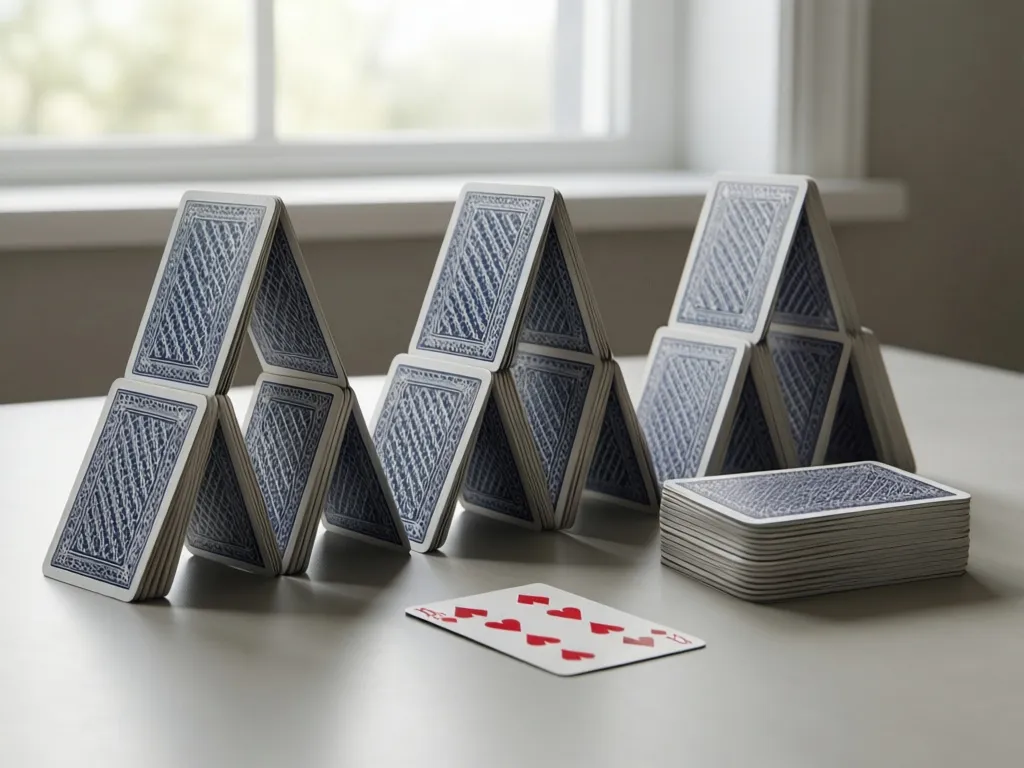
TriPeaks Solitaire is built on a distinctive three‑mountain formation. Each mountain consists of three overlapping rows, creating a total of 18 face‑up cards at the start of the game. The layout can be visualized as follows:
Read also: TriPeaks Solitaire Strategy for Long Streaks – Proven Winning Tips
- Row 1 (top): 3 cards – one on each peak.
- Row 2: 6 cards – two per peak, staggered under the top cards.
- Row 3 (base): 9 cards – three per peak, forming the foundation.
All 18 cards are dealt face up, while the remaining 34 cards form the draw pile. The draw pile is usually placed in the lower‑right corner of the screen, and a single waste card is visible at all times.
Why the Layout Matters
The three‑peak arrangement creates multiple pathways for card chains. A well‑planned layout lets you uncover hidden cards early, which is crucial because each uncovered card adds to the potential score multiplier. Misreading the layout can trap low‑value cards under high‑value ones, reducing the number of moves available.
Step‑by‑Step Setup for New Games
Most online versions automate the deal, but understanding the manual setup helps you recognize irregularities and adjust your strategy.
- Shuffle a standard 52‑card deck. Ensure a true random order; many browsers use a cryptographically secure RNG.
- Deal the first 18 cards. Place them in three overlapping peaks as described above. Keep them face up.
- Reserve the remaining 34 cards. This becomes the draw pile, placed face down.
- Turn the top card of the draw pile face up. This is the initial waste card that you can play on any exposed card one rank higher or lower, regardless of suit.
- Confirm the waste‑to‑board relationship. The waste card must be able to match at least one of the 18 exposed cards; otherwise, reshuffle before starting.
When the game begins, you have up to seven moves before the draw pile forces a new waste card. Each successful move uncovers a hidden card beneath the cleared spot, expanding your options.
Common Pitfalls and How to Avoid Them
Even seasoned players fall into predictable traps. Recognizing them early saves time and points.
- Ignoring the “one‑rank rule.” Some players focus on suit matches, but TriPeaks only cares about rank. A 7 can be played on an 8 or a 6, regardless of suit.
- Clearing low‑value cards first. Removing a 2 or 3 early often blocks access to higher cards that could create longer chains.
- Over‑relying on the draw pile. Each draw reduces the potential score multiplier. Aim to clear as many board cards as possible before drawing.
Decision Criteria for Choosing a Move
When multiple playable cards appear, rank your options using these criteria:
- Does the move uncover a face‑down card? Prioritize it.
- Will the move create a new chain of at least three consecutive ranks? Favor longer chains.
- Is the uncovered card a high‑value card (10, J, Q, K, A)? Higher cards boost the score multiplier.
Advanced Layout Tweaks for Competitive Play
Some platforms allow custom layouts. If you have that option, consider these adjustments:
- Shift the draw pile to the left. This changes the visual focus and can reduce accidental clicks on the waste card.
- Use a “tight” peak arrangement. Overlap the rows more closely to limit the number of exposed cards, increasing difficulty for a higher scoring potential.
- Enable “auto‑redeal” after the draw pile is exhausted. This gives you a second chance to clear remaining cards, but it also halves the multiplier for the second round.
FAQ
- What is the optimal starting waste card?
- There is no guaranteed optimal card, but a middle‑rank card (7 or 8) usually offers the most flexibility because it can connect to both higher and lower ranks.
- Can I play TriPeaks with multiple decks?
- Standard TriPeaks uses a single 52‑card deck. Using multiple decks changes the probability distribution and is not supported by most official versions.
- How does the score multiplier work?
- Each consecutive card played without drawing from the pile adds 1 to the multiplier. The multiplier resets to 1 after every draw.
- Is there a “best” time to use the draw pile?
- Draw only when no board moves are available or when the waste card opens a high‑value chain that outweighs the multiplier loss.