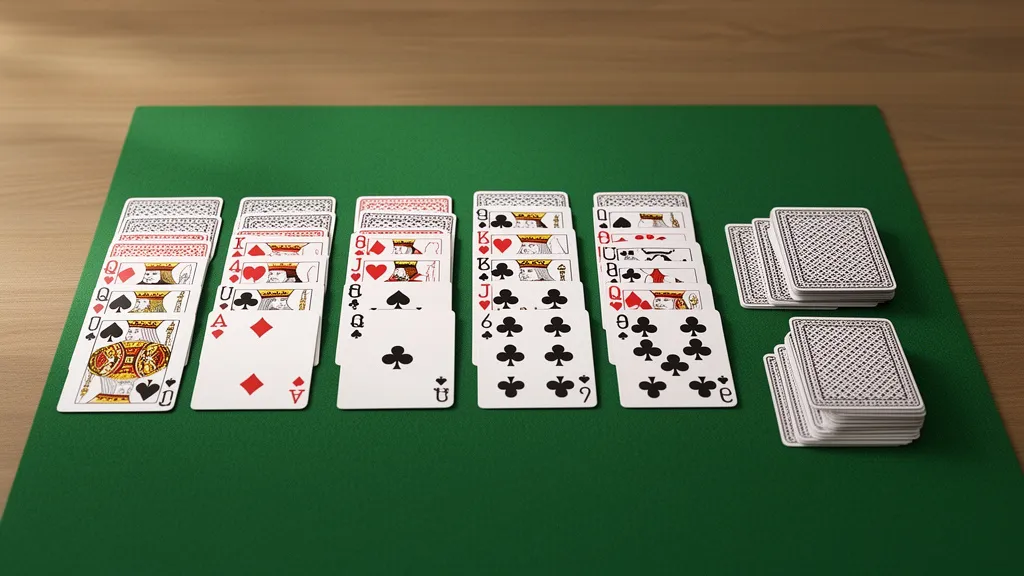
Klondike, often called classic Solitaire, stands as the quintessential patience game. The aim is simple in name but rich in decision: move all 28 cards into four foundations, one suit at a time from Ace to King. The standard setup uses a 52-card deck, seven tableau piles, a stock, and a waste pile. Mastery comes from understanding the interplay between uncovering hidden cards, managing the stock, and building orderly foundations without compromising future moves.
Read also: Solitaire Klondike Turn One Free: Rules & Strategy and Tips
Objective and core components
What you move and where
The four foundations must be built by suit in ascending order, starting with Ace. The tableau piles are built down in alternating colors (red on black, and vice versa). A King can be moved to an empty tableau space, opening new possibilities for rearranging sequences.
- Deck: 52 cards dealt into seven tableau piles with the top card of each pile face up.
- Tableau: Downward, alternating color sequences; empty columns can host a King or a valid sequence starting with a King.
- Foundations: Four piles, one per suit, from Ace to King.
- Stock and Waste: The remaining cards after the initial deal feed the stock; drawing moves to the waste, which exposes new options.
Setup, rules, and a reliable play sequence
How to deal and what to look for first
Follow the classic deal: create seven tableau piles with 1, 2, 3, 4, 5, 6, and 7 cards respectively. Only the top card of each pile is face up; the rest stay hidden. The remaining 52 − 28 = 24 cards form the stock. The first moves typically involve exposing hidden cards and moving eligible cards to the foundations.
- Deal the seven piles in order, turning up the last card of each pile.
- Move any Ace and other foundation-eligible cards from the tableau or waste to the foundations.
- Build tableau sequences downward by alternating colors, revealing new cards as you go.
- When no direct moves exist, draw from the stock to the waste (one card per draw is the traditional rule; some variants draw three).
- Continue until all cards are on the foundations.
Practical winning strategies and decision criteria
Strategies that consistently move the needle
Winning Klondike hinges on carefully chosen moves that maximize information and future options. These guidelines reflect widely used tactics among players who want steady improvement:
- Prioritize uncovering hidden cards. Each revealed card increases your future options and reduces dead ends.
- Move Aces and low-value foundations early when safe, as freeing them from the tableau greatly opens spaces for sequences.
- Utilize empty tableau spaces for Kings and associated sequences—this creates room to rearrange critical cards and unlock more moves.
- Prefer moves that expose new cards over moves that simply relocate within the tableau, unless the relocation creates a longer, continuous sequence.
- Balance stock management with search depth. If every new draw preserves options, keep drawing; if a single draw clogs potential sequences, pause to reassess.
Be mindful of common pitfalls: overly aggressive moves that block access to hidden cards, failing to utilize an available foundation move when it doesn’t hinder future plays, and neglecting to leverage empty spaces for strategic rearrangements.
Advanced tips, probability, and variant awareness
When to gamble versus when to secure a known sequence
Klondike rewards careful risk assessment. If a move reveals multiple hidden cards and opens a path to a clear foundation sequence, take it. If a move creates a dead-end that could lock a hidden card, consider alternative sequences that maintain flexibility. In computer or free-play versions, you can experiment with different draw modes (one card vs. three cards) to discover which setup aligns with your pattern recognition and memory skills.
Variants, digital play, and resources on Solitaire Compass
What to know about Klondike variants
Classic Klondike refers to the single-deck, four-foundation variant described above. Popular digital variants include different draw rules (1-card vs. 3-card), the ability to reuse the waste, and occasional changes to moving multiple cards. On Solitaire Compass, you’ll find dedicated guides and practical tips aligned with the standard, single-deck Klondike rules, plus notes on how to adapt strategies when you encounter alternative rules in online games.
History, fun facts, and how to practice smart
Klondike’s modern fame owes much to early patience games and the rise of computer versions. The Windows-era adaptation popularized countless casual players, but the core mechanics trace back to the broader family of patience games developed in the 19th and 20th centuries. A few practical facts for enthusiasts:
- The name Klondike evokes the Klondike Gold Rush era, but the card game’s exact origins are older and share roots with various solitaire families.
- In practice, consistent success often comes from disciplined sequencing, not luck alone—practice with a specific focus on uncovering cards accelerates improvement.
- Many players track card exposure patterns and memorize common safe moves to reduce uncertain decisions under pressure.
Putting it into practice: how to learn on Solitaire Compass
Our Klondike hub bundles step-by-step rules, setup guides, and winning strategies in one place. Start with the core setup, then apply the foundational strategies to live games. The site provides example scenarios, common hand histories, and quick-reference checklists so you can review decisions after play. For ongoing improvement, combine deliberate practice sessions with reflective note-taking on which moves led to uncovering new cards and which sequences led to dead ends.
Frequently asked questions
What is Klondike solitaire?
Klondike is the classic single-deck solitaire where the goal is to move all cards to four suit-based foundations, building Ace to King. It uses seven tableau piles, a stock, and a waste pile, with specific rules for how cards can be moved and built.
Is Klondike winnable?
Yes, many deals are winnable, but success depends on the initial deal and your decisions. Systematic uncovering of hidden cards and efficient use of empty spaces significantly improves win rates.
What is the best strategy for Klondike?
Key strategies include exposing hidden cards early, building foundations gradually, using empty piles for Kings, and making moves that maximize future options rather than merely relocating cards.
Why is my deck often unsolvable?
Unsolvable deals can arise from poor early decisions, such as failing to free up aces or allowing sequences to block access to hidden cards. Practice and disciplined play reduce the probability of dead ends over time.
Where can I practice legally and for free?
Alongside physical play, reputable online hubs like Solitaire Compass offer free Klondike exercises and guided practice that mirror traditional rules, with adjustable draw modes and helpful explanations.