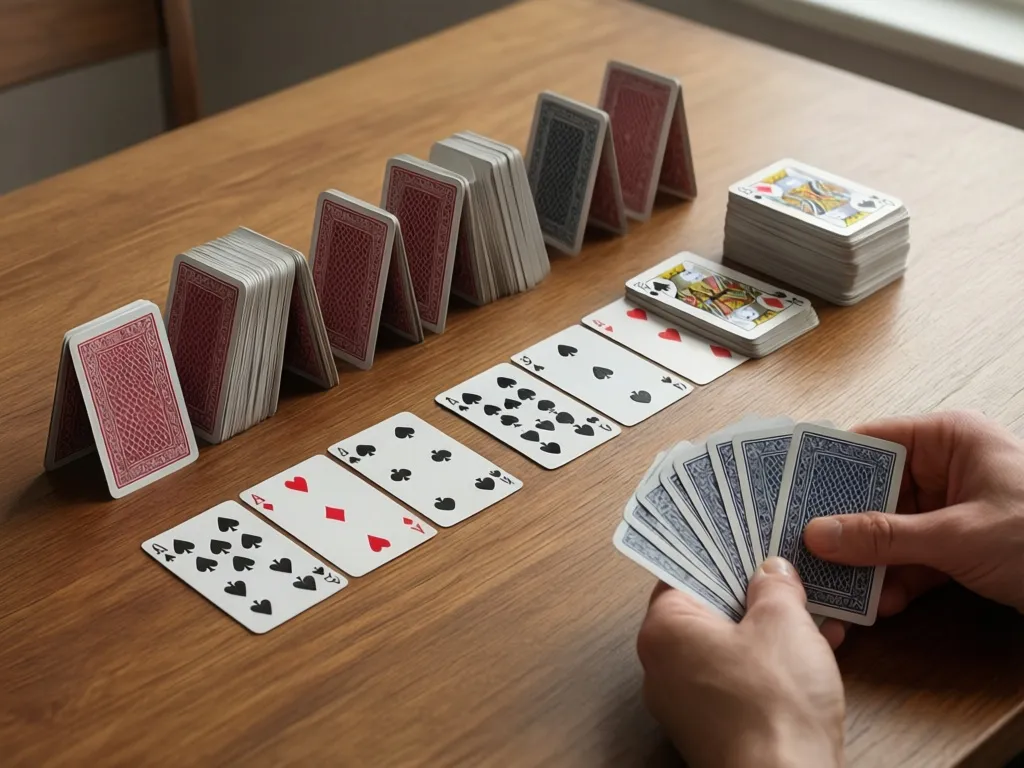
Three-turn Klondike, often called the 3-deal mode, challenges players to optimize every move across three stock passes. Unlike the standard one-deal version, you must plan with memory: which cards have already appeared, which moves unlock the most future options, and how to pace reveals across passes. The core idea is simple: expose useful cards, build foundations steadily, and avoid moves that waste valuable turns. A disciplined approach reduces wasted cycles, preserves flexibility, and increases the likelihood of completing the game within the three-deal constraint.
Read also: Klondike Solitaire: 1-Turn Tips to Master the Draw Strategy
Understanding the 3-Turn Klondike Setup
In the 3-turn variant, the stock is cycled through three times before a re-deal is exhausted. You typically begin with a standard tableau and a stock pile of face-down cards. As you reveal cards from the stock, you can place the revealed cards on the waste pile and move them to the tableau or foundations if they fit. After you reach the end of a pass, the waste becomes the new stock for the next pass, preserving the order of the cards. The key difference from the classic one-deal game is the memory requirement: a card drawn on an earlier pass may still be available on a later pass, so your decisions should account for what you will or will not see again. This makes careful sequencing and prioritization essential.
Core Principles of a 3-Turn Strategy
- Foundation-first discipline: Move aces to foundations as soon as they are available and safe. Don’t delay an ace if its movement won’t block higher-priority reveals later in the pass.
- Uncovering face-down cards: Prioritize moves that reveal new cards from the tableau. Each newly exposed card can unlock a cascade of potential plays that may be more valuable than immediate foundation advances.
- Alternating-color sequences: Build down sequences in alternating colors on the tableaux. This preserves options for future moves and reduces the chance of creating unplayable holes.
- Empty column rule: A King can occupy an empty column. If you have multiple Kings and empty columns, choose the placement that opens the most powerful new sequences.
- Memory-aware decisions: Since you cycle through stock three times, remember which cards have already appeared. Avoid moves that permanently block a card you’ll need on a later pass.
- Efficiency over speed: In 3-turn mode, efficiency matters more than rapid clearing. A well-timed reconfiguration of tableau stacks often yields more long-term gains than a quick, risky shuffle.
Practical 10-Step Routine for 3-Turn Klondike
- Scan the board for any immediate foundation moves and perform them first, prioritizing aces and low cards that unlock new rows.
- Inspect each tableau, looking for moves that reveal a face-down card. Favor moves that uncover new ranks or the card needed to continue a sequence.
- When choosing between multiple moves on the same tableau, prefer the option that creates the most usable sequence or opens an empty-column opportunity for a King.
- Move cards to the foundations only when it does not block a more valuable reveal on the tableaux or waste.
- From the waste, place the top card onto a tableau where it fits or onto the foundation if possible; avoid breaking up a potential long, useful sequence unless necessary.
- Monitor the stock usage across passes. If a pass leaves a key card blocked in the stock, plan ahead to uncover it in the next pass before you exhaust options in the current pass.
- When a tableau sequence becomes blocked by a card you don’t want to move yet, consider temporarily shifting the sequence to an alternate tableau if it keeps options open.
- Prioritize king placements to create new opportunities for building. An empty column is a powerful lever across passes.
- As you approach the end of a pass, reassess the board to determine the best compulsory moves that will improve chances in the next pass.
- Repeat this routine across passes, adapting to the cards revealed and the evolving tableau structure until the game is won or the three passes are exhausted.
Decision Criteria, Trade-offs and Tips
Three-turn Klondike demands careful judgment. Here are practical criteria to guide decisions:
– If moving a card to the foundation will stall a potential reveal that unlocks multiple cards, weigh the long-term payoff against the short-term gain. - Preserving future options – Avoid moves that create isolated, unplayable piles. Prefer moves that keep at least one card in each tableau accessible from the top.
- Blocking awareness – If a card on top blocks several useful faces, prioritize exposing that card early in the pass.
- Memory discipline – Track which cards have appeared in each pass. This helps prevent wasted moves on cards you will not see again this cycle.
- Endgame mindset – In the final pass, prioritize finishing columns and completing foundations even if it requires suboptimal intermediate moves earlier.
Common Pitfalls and How to Avoid Them
A few frequent errors hold players back in 3-turn Klondike. Avoid them with a deliberate routine:
- Over-committing to a single tableau when other tableaux offer quicker reveals.
- Prematurely moving a card to the waste if it could unlock a longer cascade later in the pass.
- Ignoring empty-column opportunities until late in the game, which can waste a crucial King placement.
- Being memory-light: underestimating what has already appeared across passes.
FAQ
What is 3-turn Klondike?
3-turn Klondike refers to playing Klondike with three passes through the stock. After each pass, the waste becomes the new stock for the next pass, preserving card order. This variant increases memory demands and strategic planning compared to the standard one-deal game.
Is 3-turn easier or harder than 1-turn?
It’s generally harder because you must manage more information and fewer opportunities to reshuffle. However, a disciplined approach that prioritizes uncovering cards and building foundations can yield higher win rates for players who embrace memory and patience.
Should I always move to foundation when possible?
Foundation moves are powerful, but not every foundation move is optimal if it blocks an unlock on the tableau that would yield a larger long-term gain in the same pass. Evaluate whether the move frees more useful cards or creates a more flexible setup.
How can I improve memory for 3-turn play?
Keep a quick mental log of which cards have appeared and on which pass. Practicing with deliberate notetaking (in your head or physically on a scratch pad) about key cards like Aces, Deuces, and kings helps you plan ahead across passes.