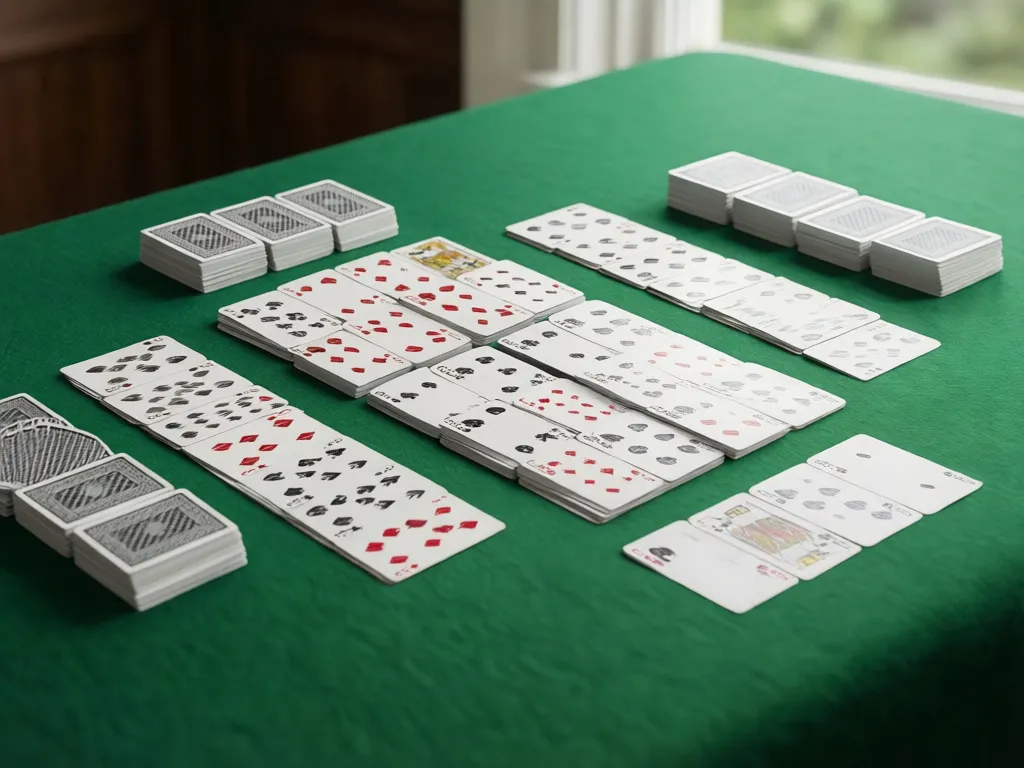
Green felt is the classic backdrop for FreeCell play, revered by players for its clarity and contrast. On Solitaire Compass, FreeCell on green felt recreates the familiar open-card layout and four free cells, while emphasizing disciplined planning and careful execution. This guide dives into how the felt color affects perception, how to structure your approach to every deal, and how to translate traditional table tactics into reliable digital practice. Whether you are fresh to the official setup or optimizing for a 100% win-rate mindset, the core ideas stay the same: establish foundations early, manage your free cells intelligently, and sequence moves with foresight.
Read also: FreeCell Winning Strategies: Expert Tips to Boost Your Win Rate
What Green Felt Means for FreeCell
The term "green felt" signals a familiar card-table environment. Though the color does not change the mathematical solvability of a deal, it matters for visibility, glare reduction, and cognitive load. A high-contrast background like green felt helps you track suit colors, judge sequences quickly, and spot gaps beneath piles. On digital FreeCell, choosing a green-tinted background or a similarly high-contrast palette can yield tangible benefits in decision speed and accuracy. In this section we focus on applying the feel of green felt to digital play: the habits, not the room color, drive results.
Key implications for your play on green felt include prioritizing early foundation-building, using free cells to unlock the most blocked columns, and avoiding mid-game overextension that leaves deals unsolved after a wrong turn. The open-card layout demands forward planning: every move should reveal hidden cards or unlock a cascade of natural progress in the tableau. The green felt environment supports these habits by reducing visual noise and helping you spot the next safe move at a glance.
Core Strategies for FreeCell on Green Felt
Successful FreeCell on green felt hinges on disciplined management of the four free cells and a steady push toward foundations. Below are core strategies, followed by actionable drills you can apply in a typical game on Solitaire Compass.
Free Cell Management
- Reserve free cells for moves that unlock multiple better options. Don’t fill them with cards that you can move later from a tableau column.
- When a new blocker appears, ask: will using a free cell here buy me a new road to the foundation, or am I trading one blocker for another?
- Aim to keep at least one free cell free for the moment you need to bridge a gap and reveal a hidden ace or two. Overfilling frees you now and hurts you later.
- If possible, clear a free cell to prepare for moving a long sequence in a single, well-planned step—this reduces random repositioning later in the deal.
Foundations and Sequence-Building
- Move cards to foundations as soon as they are safely movable, especially Aces and low-rank cards that unlock longer sequences.
- Prioritize establishing a clean lane to King in each suit wherever a column aligns with your current card flow. This reduces the chance of stuck sequences later.
- Work from the left side of the tableau to the right when practical, to minimize shuffling back and forth and to preserve open columns for new cards.
- Be mindful of blocking moves: if a single card prevents multiple higher-cascade moves, consider a temporary rearrangement to decompress the column.
In practice, a well-balanced approach looks like this: you scan for instantly movable aces and twos, then plan a chain to bring more cards into foundations. The four free cells should act as a temporary staging area for the blockers, not a storage for low cards that you can move later without impact. When you can, push a sequence to a foundation and then re-evaluate which column offers the best next unlock.
Practical Drills and Practice Plans
Transforming theory into solid performance requires drills that reinforce decision discipline. Try the following practice plan on Solitaire Compass or any FreeCell implementation that mirrors the open-card layout on green felt.
- Daily Deal Review — After each deal, write down the first three blockers you identified and the free-cell use you considered. Compare results with a timer to build speed without sacrificing accuracy.
- Two-Move Drill — Choose two moves that free two or more cards to foundations. Execute them in order, ensuring you haven’t trapped a card behind a future blocker.
- Blocked Column Rescue — Pick a column currently blocked by a single card. Find a plan to expose that card using free cells without creating new blockers elsewhere.
- Foundations First Routine — In every game, commit to moving any card eligible for the foundation within the first five moves, unless it blocks a critical unlock.
- Timed Solves — Set a 5-minute timer and aim to reach a solution or a clear plan for the next move. This trains pace under pressure while maintaining accuracy.
These drills develop the core mental habits: quick recognition of safe moves, efficient use of free cells, and a steady progression toward foundations. The goal is not to rush but to reduce wasted moves and avoid backtracking on the same blockers.
Common Pitfalls on Green Felt and How to Avoid Them
- Overfilling free cells with low cards: this ties up resources and reduces your ability to unlock longer sequences.
- Neglecting early foundations: delaying Aces and low cards blocks multiple paths and increases decision fatigue.
- Exposing cards without a plan: revealing a new blocker only works if you have a clear, sustainable path forward.
- Forgetting to reassess after a big move: every successful foundation move should trigger a quick re-evaluation of the tableau for the next best unlock.
FAQ
What is green felt in FreeCell?
Green felt refers to the traditional card-table surface and its visual environment in FreeCell. On Solitaire Compass, it emphasizes clarity and reduces glare, aiding quick decisions. It does not change game rules.
Does the color of the felt affect solvability?
No. The color does not alter the cards or rules. It affects visibility and cognitive load. Players often report better readability and fewer misplays with high-contrast backgrounds like green felt.
What is the best approach to improve win rate on FreeCell?
Focus on foundations-first play, disciplined free-cell management, and a plan for each deal. Regular practice with timed drills, post-deal analysis, and recording blockers will steadily raise accuracy and win-rate over time.
How should I use the four free cells effectively?
Use free cells to hold blockers that prevent immediate moves to foundations. Keep one cell free for urgent unlocks, and avoid filling cells with cards you can move later from columns if possible.