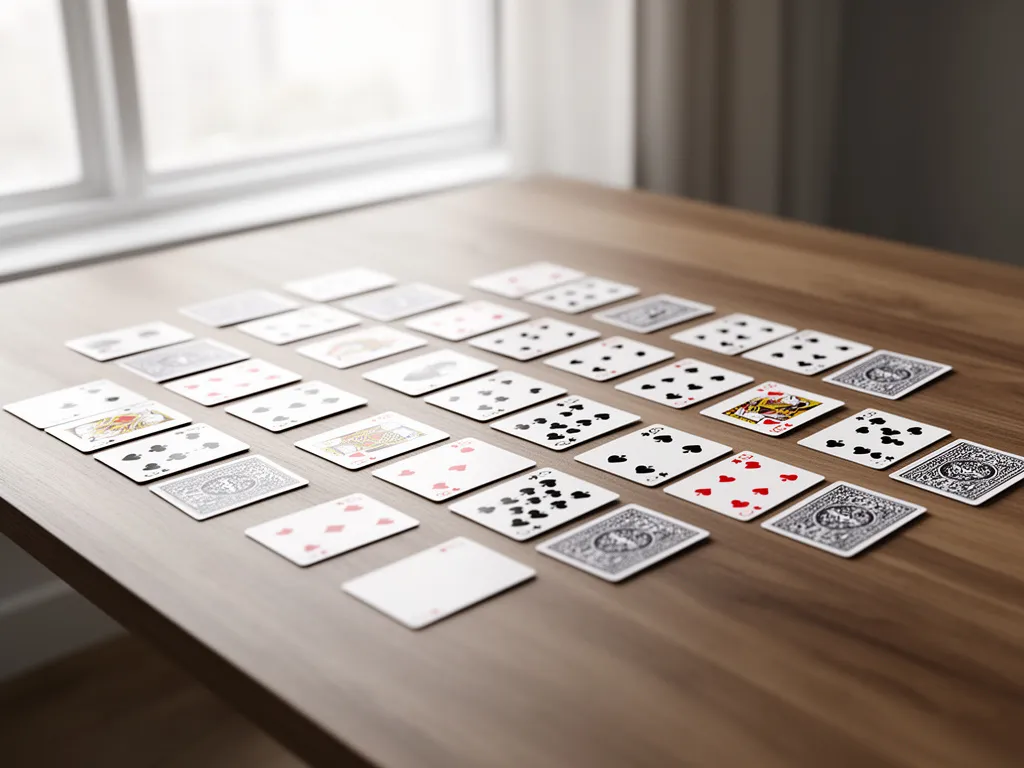
Welcome to Solitaire Compass FreeCell hub. This category gathers everything you need to master the open-card layout and the four free cells. Whether you are a beginner learning the official setup and basic rules or an experienced player pursuing advanced sequence-building strategies, this guide is structured to be practical, repeatable, and genuinely useful.
Read also: FreeCell Green Felt: Master the Open-Card Layout – Tips
FreeCell is celebrated for its solvability when approached with disciplined planning, careful freeing of buried cards, and efficient use of free cells. The central aim is simple: move cards to the four foundations by suit in ascending order, reveal hidden cards, and preserve enough flexibility in the tableau to uncover the next best move.
Understanding FreeCell: Rules, Goals, and Open-Card Layout
In FreeCell, you start with a standard 52-card deck arranged into eight tableau columns. Four free cells act as temporary storage and four foundations await cards by suit from Ace to King. Cards in the tableau must typically descend in alternating colors. You move single cards or, when allowed by the interface, longer sequences, to create open paths for uncovering cards beneath. The key difference from many patience games is the emphasis on freedom: with four free cells, most deals can be solved if you manage resources and plan several moves ahead.
Practical takeaway: treat each move as a step toward revealing a buried card. If a move seems to block multiple options, pause and reassess, as small changes early in a deal ripple through later steps.
Strategic Play: Core Techniques for Consistent Wins
Managing the Free Cells
- Preserve at least one empty free cell for as long as possible to maximize movement options.
- Use free cells to temporarily hold cards that unlock buried cards, not to park unrelated pieces for long stretches.
- Avoid overloading a single free cell with nonessential cards; spread the load to keep flexibility.
Foundations and Tableau Principles
Build foundations steadily by suit, but do not force a move that blocks multiple potential shifts. When possible, clear a column to expose a new card that unlocks two or three other cards. In the tableau, prefer moves that increase future options—like placing a card that enables an immediate follow-up move rather than a one-off transfer.
Strategic cues:
- Always check if a move frees up a higher card in a different column. Small discoveries compound.
- When you can move a sequence, verify that the destination will not trap the next required card.
- Balance clearing tables with building foundations so you never run out of open paths.
Avoiding Dead Ends
Dead ends are the result of rigid layouts and poor free-cell usage. To avoid them, practice a pattern you can repeat: identify two or three promising cards, test the sequence, and only commit when it improves the overall flow. If you hit a stall, backtrack to the most recent decision point and try an alternative route.
Practice Plans and Tools on Solitaire Compass
Solitaire Compass offers a dedicated FreeCell play environment with an open-card view, undo capability, and guided drills designed to reinforce core habits. Use the tools to analyze your decisions, not merely to finish a deal.
- Daily drills: start with two easy deals, then tackle a challenging one while narrating your thought process.
- Move-by-move review: after each completed game, replay key moves to confirm why a different sequence would have been stronger.
- Pattern recognition: practice common sequences and look for repeatable patterns that unlock large groups of cards.
Practical plan for steady improvement:
- Week 1: learn the four free-cell concept and basic foundations.
- Week 2: focus on freeing buried cards efficiently while maintaining at least one open path.
- Week 3: introduce deliberate sequence-building and avoid unnecessary transfers.
- Week 4: aim for consistent win rate increases and record your progress to refine tactics.
Common Pitfalls and How to Avoid Them
Two frequent missteps are overusing free cells for cards that can be moved later and failing to evaluate the long-term consequences of a single move. Always consider the continuation after your current move, not just the immediate reveal. Another pitfall is forcing sequences that seem to solve a column while blocking a more critical card; check both plan A and plan B before finalizing a transfer.
FAQ
What is FreeCell Solitaire
FreeCell is a patience game where the objective is to move all cards to foundations by suit, using four free cells and the tableau to manage the flow.
How many free cells are there
There are four free cells that serve as temporary holding spots to enable card rearrangement and reveal hidden cards.
Can every FreeCell deal be solved
Most deals are solvable with disciplined planning and optimal use of free cells, but some deals are extremely challenging and may require deep analysis and experimentation with different paths.
What is the best way to practice FreeCell
Practice by studying patterns, using the undo feature to review decisions, and applying the step-by-step strategies described in this guide to build repeatable methods.