Understanding the Deck and Layout
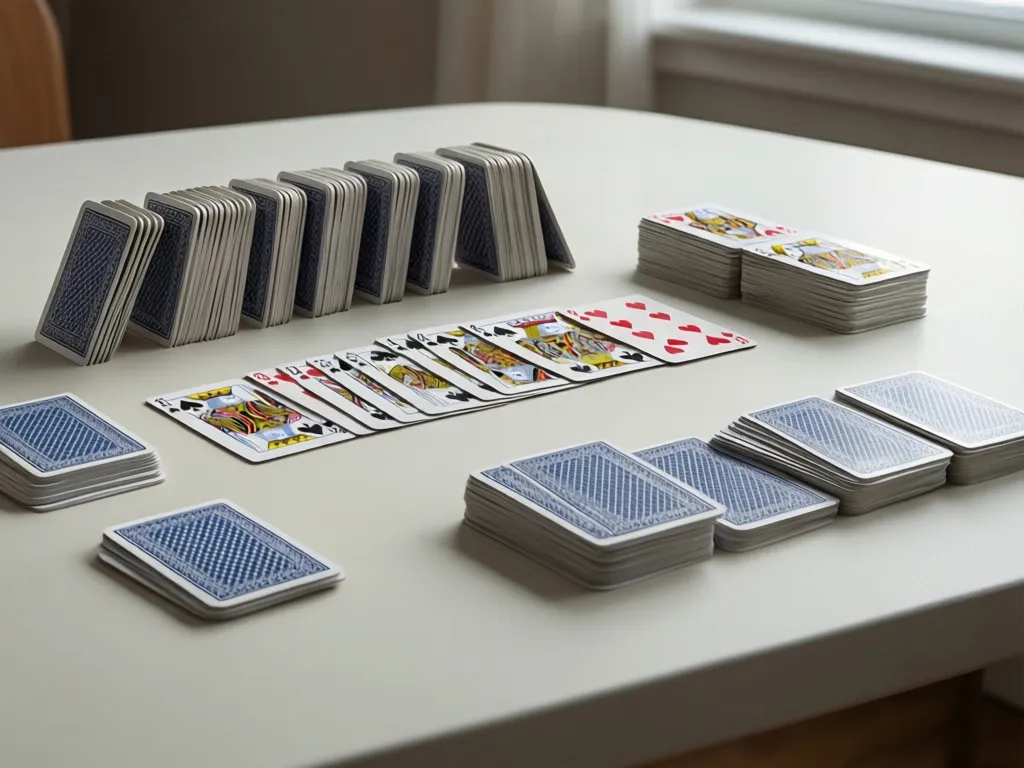
Klondike uses a standard 52‑card deck. The game begins with seven tableau piles. The first pile gets one card (face‑up), the second gets two cards (one face‑down, one face‑up), and so on until the seventh pile, which holds seven cards with only the top card visible. The remaining cards form the stock, which feeds the waste pile.
Read also: Klondike Solitaire 3-Turn Strategy: Master the 3-Deal Mode
Key terms
- Tableau: The seven columns where most of the action occurs.
- Foundation: Four empty piles (one per suit) that must be built from Ace to King.
- Stock: The draw pile, typically turned three cards at a time (or one, depending on the variant).
- Waste: Cards turned from the stock that are not immediately playable.
Step‑by‑Step Rules for Beginners
- Deal the tableau as described above.
- Turn the top card of the stock onto the waste. In the three‑card draw, you may cycle through the stock up to three times.
- Move any exposed Ace to a foundation pile.
- Build tableau columns down by alternating colors (e.g., red 9 on black 10).
- When a tableau column becomes empty, you may place a King (or a sequence starting with a King) there.
- Whenever possible, move cards to the foundations to free up space for new moves.
- Continue drawing from the stock and rearranging until no legal moves remain or all cards are on the foundations.
These basic moves are the foundation of every Klondike session. Mastering them reduces early‑game frustration and sets the stage for deeper strategy.
Advanced Strategies to Increase Win Rate
Winning Klondike consistently requires foresight and selective risk‑taking. Below are three proven tactics:
1. Preserve Low‑Rank Cards in the Tableau
Never rush a low card (2–4) to a foundation if it blocks a longer descending sequence. Keeping such cards in the tableau often unlocks hidden face‑down cards.
2. Prioritize Uncovering Face‑Down Cards
Each hidden card represents potential moves. When you have a choice between moving a card to a foundation or exposing a face‑down card, choose the latter unless it creates an irreversible blockage.
3. Manage the Stock Wisely
In three‑card draw mode, track the order of cards in the waste. If a needed card sits two positions down, avoid drawing a new set until you’ve exhausted the current waste, preserving the chance to retrieve it later.
Common Pitfalls & How to Avoid Them
Even seasoned players fall into predictable errors:
- Moving cards to foundations too early: This can lock essential cards in the tableau, preventing you from exposing deeper cards.
- Neglecting empty tableau slots: An empty column is a powerful tool for repositioning Kings and long sequences. Always consider whether a move creates an empty slot.
- Over‑relying on the three‑card draw: The draw limit means you may lose access to a needed card after three cycles. Plan ahead and use the waste strategically.
FAQ
- Can I win every Klondike game if I follow the rules?
- No. About 80% of random deals are mathematically winnable, but the remaining 20% are impossible regardless of strategy.
- What is the difference between “draw three” and “draw one”?
- “Draw three” turns three cards from the stock at a time, limiting access to specific cards; “draw one” reveals a single card each turn, increasing win probability but changing game pacing.
- Is there a “best” way to handle the waste pile?
- Yes. Treat the waste as a temporary holding area. Only move a waste card to the tableau if it creates a new empty column or uncovers a face‑down card.
- How many times can I recycle the stock?
- In classic Klondike you may recycle the stock up to three times. Some digital versions allow unlimited passes, which dramatically raises the win rate.