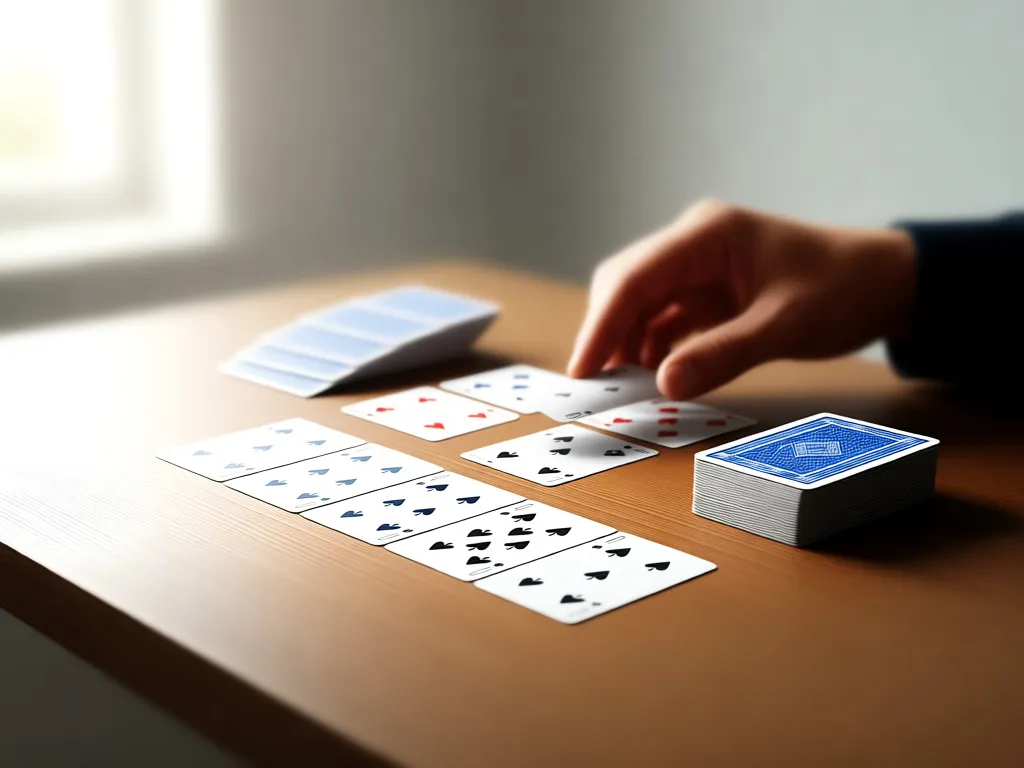
Klondike Solitaire Free is the accessible, no-cost version of the classic patience game. This guide provides a rigorous, practical resource for players of all levels, covering setup, core rules, winning strategies, common pitfalls, and ways to practice effectively on Solitaire Compass’s Klondike hub. Whether you play one-card draw or three-card draw, the fundamentals stay consistent, and mastery comes from disciplined tableau management and thoughtful stock usage.
Read also: Klondike Solitaire Game: Master the Classic Card Challenge
How Klondike Free Works
Deck, tableau, and foundation
Klondike uses a standard 52-card deck. The 7 tableau piles are laid out so that pile i has i-1 face-down cards with one face-up card on top. The remaining cards form the stock, with a waste pile created as you draw. Foundations are built up by suit from Ace to King. The goal is to move all cards to the foundations in ascending order by suit.
Key movement rules include:
- You may move a face-up card or a valid descending sequence of alternating colors within the tableau. A sequence can be moved as a unit if it remains in proper order.
- Aces are placed on the foundation as soon as they become available, but it’s often wiser to delay this if the move would block uncovering a hidden card.
- An empty tableau space can be filled only by a King or a valid sequence beginning with a King.
- Kings to empty spaces are powerful early moves because they unlock new sequences and reveal hidden cards.
Draw rules vary by site. Most free Klondike implementations offer either “draw one” or “draw three” from the stock. The choice affects both strategy and pacing: draw one preserves options longer, while draw three accelerates card turnover but can reduce immediate flexibility. Practice both modes if available to understand how your decision cadence shifts.
Rules and Setup for Beginners
Decide between one-card or three-card draw. If you’re new, start with one-card draw to maximize control and learn the sequencing logic. Place one card face up on the first pile, two on the second (one of which is face-up), three on the third, through seven on the seventh. The remaining stock sits to the side. Turn the top card of each pile face-up until you have seven visible tops. When a face-down card becomes the top card of a pile, flip it up. Build Ace-to-King by suit. Don’t rush to fill foundations if it prevents uncovering hidden cards. Draw from stock according to your mode (one or three). Move accessible cards between tableau piles and to foundations as soon as sensible.
Practical tips for beginners include mindful sequencing, recognizing when to break a long tableau to reveal hidden cards, and tracking which suits you’ve opened in the foundations to avoid late-stage dead ends. A disciplined approach to moves prevents wasted opportunities and sharpens long-term win chances.
Winning Strategy for Free Klondike
Successful Klondike play hinges on a balance between uncovering hidden information and systematically building foundations. The following principles help convert frequent practice into consistent wins.
Prioritize moves that reveal face-down cards, even if a small immediate gain seems possible elsewhere. Seek moves that create longer, alternating-color sequences; longer sequences offer more mobility for later steps. Move Aces to foundations when it won’t block an essential reveal. Early foundation building is good, but avoid premature releases that lock valuable tableau space. With one-card draw, use waste cards to sustain options; with three-card draw, anticipate which waste cards will appear next and plan moves before drawing again. Only place a King (or a King-starting sequence) in an empty column. A well-placed King can unlock multiple new moves.
Practical play patterns
- Identify all available Kings that can fill empty columns and sequence moves that enable those Kings to unlock new cards.
- When faced with two equivalent moves, choose the one that reveals a hidden card or unblocks a newer tableau card.
- Track suits in foundations; attempting to advance a suit where you’ve already seen many cards may lead to dead ends if the tableau becomes blocked.
- Use one-card draw to maximize decisions; switch to three-card draw if you need faster turnover and can tolerate fewer immediate options.
Distinctive to free versions is the balance between speed and accuracy. Even in short sessions, applying a deliberate, repeatable process improves your win rate over time.
Common Pitfalls and How to Avoid Them
It can block reveals in the tableau. Continue to maneuver toward uncovering hidden cards before rushing to finish a suit. Don’t neglect moves that unlock black-red alternation sequences; these often unlock decisive plays later. In draw-three mode, running out of stock with no available moves is a common dead end. Plan several steps ahead before drawing. A correctly placed King can unlock multiple fresh moves. Don’t rush to fill spaces with non-King cards.
History, Variants, and How Free Differs
Klondike is a classic patience variant with roots in 19th-century card games. Its Windows-era resurgence popularized the format globally. In the free online ecosystem, “Free” typically denotes an ad-supported, no-cost version with optional or feature-limited upgrades. Core mechanics—tableau, stock, waste, and foundation—remain consistent across platforms, while draw options (one-card vs three-card) and hint features may vary. The best free Klondike experiences emphasize reliable logic, clear visual cues, and consistent rules to build skill transferable to paid or premium versions.
Practice, Tools, and Improving Your Game
To elevate your Klondike play on Solitaire Compass, use the following guidelines as a practical roadmap:
Short daily sessions concentrate learning on specific movable sequences and pattern recognition. Let hints guide you when you’re stuck, then work to identify the exact move that unlocks the next card. When you fail, backtrack to the first move and seek an alternative sequence that reveals different cards. Compare one-card vs three-card draw outcomes to determine which suits your style and patience level.
FAQ
- Is Klondike Free truly free to play? Yes. Free versions are typically supported by ads and may offer optional upgrades, but core gameplay is accessible without payment.
- Can you always win Klondike? Not every deal is solvable. Some layouts have no viable sequence that leads to completion, regardless of skill. Practice improves win rates, though.
- Should I draw one or three cards? Draw-one preserves flexibility and tends to produce more deliberate strategies; draw-three accelerates gameplay but reduces decision depth. Try both to see which aligns with your preference and pace.
- What is the best first move? There isn’t a universal best first move. A practical approach is to reveal a hidden card whenever possible and avoid moves that unnecessarily block future options.
- How long does a typical game take? Time varies by deal and draw mode. Expect longer sessions when learning, shorter ones when you’re executing a tight, well-planned sequence.